TIMING
The 500 rule
Divide 500 by the focal length to get a maximum exposure in seconds on a full-frame sensor. At 14 mm that is about 35 seconds.
Check a lens canonfullframecamera
NIGHT-SKY PHOTOGRAPHY
The sky turns while the shutter is open.
Check a lens
500 ÷ mma starting point
Leave it open too long and every star stretches into a short line. Simple rules of thumb give a starting time, and a newer formula allows for today's finer sensors.
At a glance
≈ 35 s
Longest exposure at 14 mm, full frame
500 divided by 14 gives around 35 seconds before stars begin to trail. The Planetary Society calls the rule a starting point, to be adjusted by experiment.
500 RULE · PLANETARY SOCIETY
≈ 16 s
16 mm at f/2.8 on a 30 MP sensor
The NPF formula gives 16.2 seconds for this setup, against 31.2 seconds from the 500 rule, because smaller pixels record smaller movements.
NPF RULE · FSTOPPERS
TWO NUMBERS WORTH KNOWING
One figure from the old rule of thumb,
one from the newer formula.
The rule began as 600 in the film era; Fstoppers notes that digital sensors resolve more than film, so photographers moved to 500 or even 400. Dark skies are scarce too: a 2016 light-pollution atlas in Science Advances found that nearly 80 percent of people in North America cannot see the Milky Way.
A QUICK LENS CHECK
Pick a focal length on a full-frame camera to see the 500-rule starting time. The bar shows how quickly drift appears. On a crop sensor, multiply the focal length by 1.5 first.
The 500 rule is a rule of thumb, not a guarantee. Take a test frame and zoom in on the screen to check the stars.
THE SHORT ANSWER
Stars drift because the Earth rotates.
Focal length sets how soon the drift shows.
TIMING
Divide 500 by the focal length to get a maximum exposure in seconds on a full-frame sensor. At 14 mm that is about 35 seconds.
Check a lensFINER SENSORS
More pixels show drift sooner. The NPF rule adds aperture and pixel pitch, and in one worked example gives about half the 500-rule time.
See the numbersTRAILS
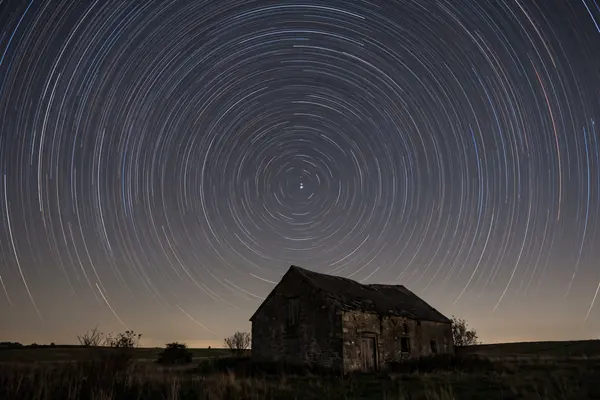
Point toward the pole star and the sky circles it. Many short frames, stacked in software, are safer than one very long exposure.
Plan a night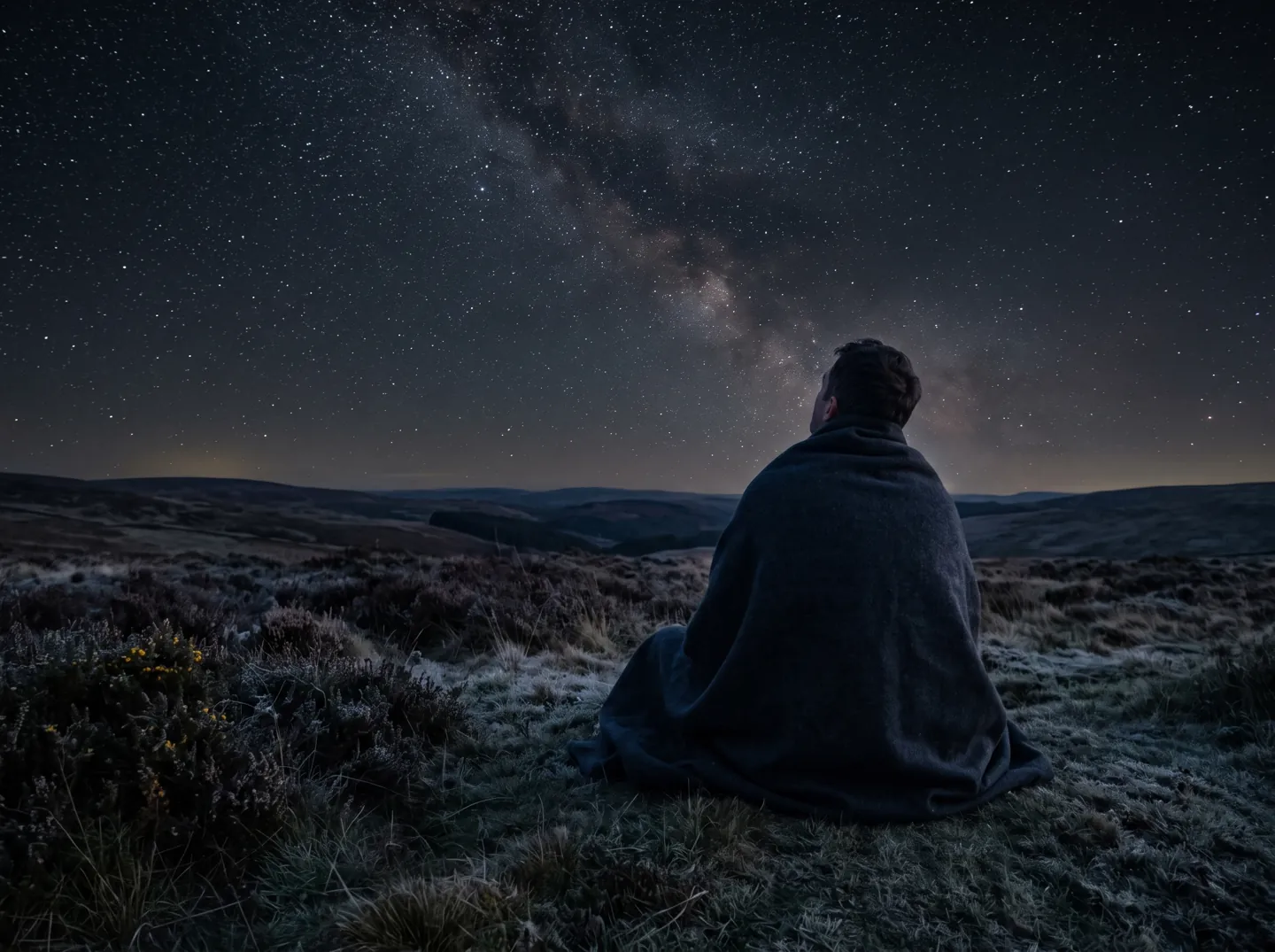
FOUR STEPS FOR A FIRST NIGHT
Most of the work happens before you leave home: the Moon, the season and how dark the place is.
The Planetary Society suggests shooting the Milky Way at new Moon, or up to a week either side, so moonlight does not wash it out.
Get away from city lights and, if you can, higher up. Bryce Canyon in Utah, a Gold Tier International Dark Sky Park since 2019, is one example; the National Park Service suggests coming close to a new Moon.
Focus manually at infinity, then try f/2 to f/2.8, 10 to 30 seconds and ISO 1600 to 6400, and zoom in on a test frame.
Long exposures and cold nights drain batteries fast, so bring spares. A remote release or intervalometer avoids touching the camera.
STAR TRAILS
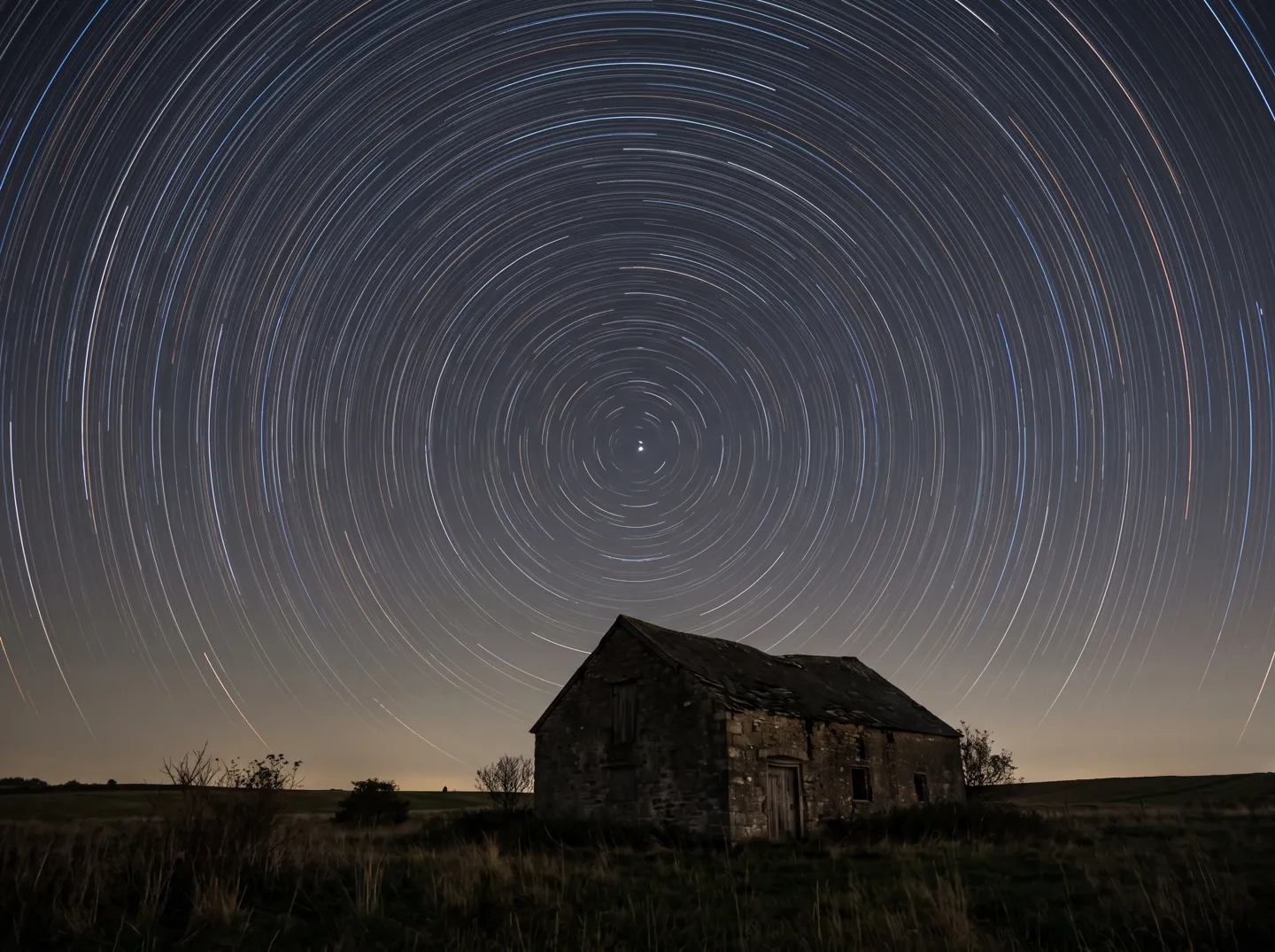
In the northern hemisphere the stars appear to circle the pole star, Polaris. Point the camera that way, keep shooting, and the frame fills with arcs.
The Planetary Society prefers many shorter frames stacked in software to one long exposure: the sensor heats less, a stray light spoils one frame rather than the night, and even 2 or 3 second frames can build trails under bright city skies.
Questions
A rule of thumb for the longest exposure before stars trail: 500 divided by the focal length in millimeters on a full-frame camera. For a crop sensor, multiply the focal length by 1.5 first.
Because the Earth rotates, the stars appear to move across the sky. Leave the shutter open too long and each point of light is drawn out into a short line.
It is a starting point. Fstoppers notes that modern sensors resolve more than film, so many people use 500 or 400 instead of the older 600, or the NPF rule, which adds aperture and pixel pitch.
Some part of it is visible all year from latitudes like Bryce Canyon's. The National Park Service at Bryce Canyon says June through August give the best views, when the bright galactic center is in the sky. Choose a moonless night away from lights.
They turn through the same angle but cover a shorter distance, so they trail less. Stars nearer the celestial equator travel further and streak sooner, which is why some calculators ask for declination.
Sources
ABOUT THIS NAME
canonfullframecamera.com is part of the DoodleSale portfolio. It isn't in an auction right now, but you can ask about leasing it.